


I’ve hyped before the benefits of circadian amplitude, a hard-to-measure, heavily theoretical construct that I believe to be the underpinning of much of chronic disease. Generally speaking, I consider the best amplitude to be high amplitude—the kind you get when you go camping for a week and get glorious daylight and very dark nights. But when might low amplitude be better than high amplitude?
Here’s a few ideas:
When you are sick, and you want to avoid having your immune activation drop below a threshold (avoiding periods of elevated vulnerability)
When you are pregnant and eating at 1:00 am to keep a baseline level of calories available to your baby and avoid puking (avoiding periods of decreased available calories)
When you’re a rotating shift worker who needs to be alert and performant over the course of the night shift (avoiding periods of elevated sleep drive while operating heavy equipment)
When the alternative is having such high amplitude in inflammatory disorders that you hit unhealthy cytokine levels, triggering symptoms (avoiding “red zone” levels; this one courtesy of Ken Wright)
When you are sick and are artificially holding your temperature at a high, feverish level to kill the invaders (strategic flatness; also Ken)
There’s another one, though, which I think is core to understanding circadian medicine: when your rhythms are flat, the timing of an intervention just doesn’t matter that much. You are the same at all hours; ergo, you can take a drug whenever, and it will work equally well.
This means that there are likely some drugs for which the hierarchy, from best to worst, goes something like:
A high-amplitude person dosed with a time-dependent drug at the correct time
A low-amplitude person dosed with a time-dependent drug at the correct time
A low-amplitude person dosed with a time-dependent drug at the wrong time
A high-amplitude person dosed with a time-dependent drug at the wrong time
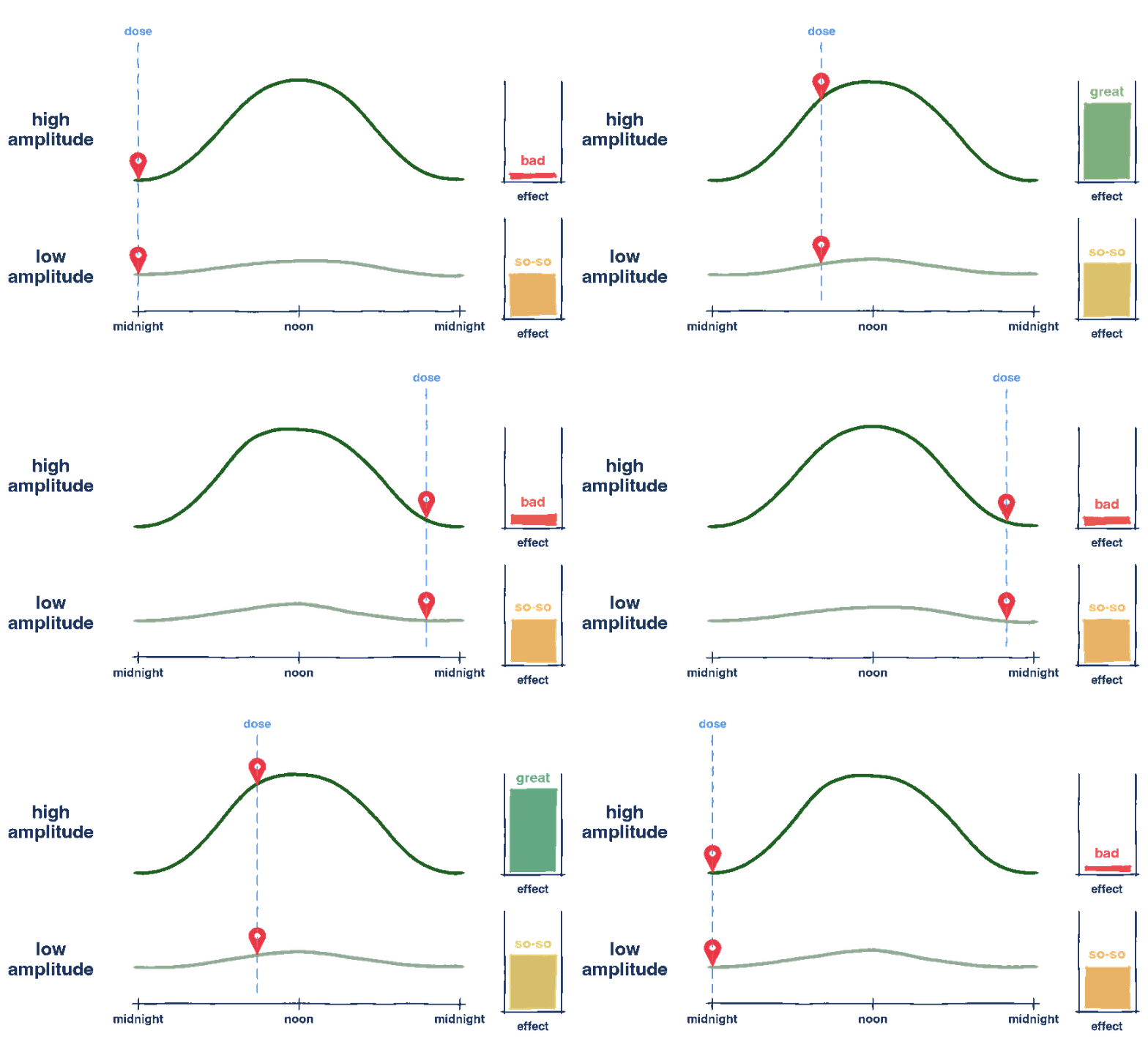
Combined with the fact that Phase 2 trials tend to enroll later-line, sicker, and flatter patients, while Phase 3 trials recruit from a broader, healthier population, such a situation could explain why a promising drug can fumble the leap from Phase 2 to Phase 3. After all, if sicker patients are put on an experimental drug at the wrong time, they could experience a respectable benefit that evaporates when the mistiming makes itself known in patients with stronger rhythms.
I don’t want to give the wrong impression with this post: almost all of the time, I’d bet on a stronger rhythm being better than a weaker one. Yet it’s good for all of us to keep in mind: to experience the rewards of a high circadian amplitude, you must expose yourself to the treacherous ordeal of having drug timing actually matter.
Thanks to Ken Wright for reviewing and stopping me from saying “frying yourself” is a risk of high inflammation.