


You’re in a boat in a boat race.

The boat race is taking place in a circular current. You and your competitors are looping around and around, pushed along by the movement of the water.
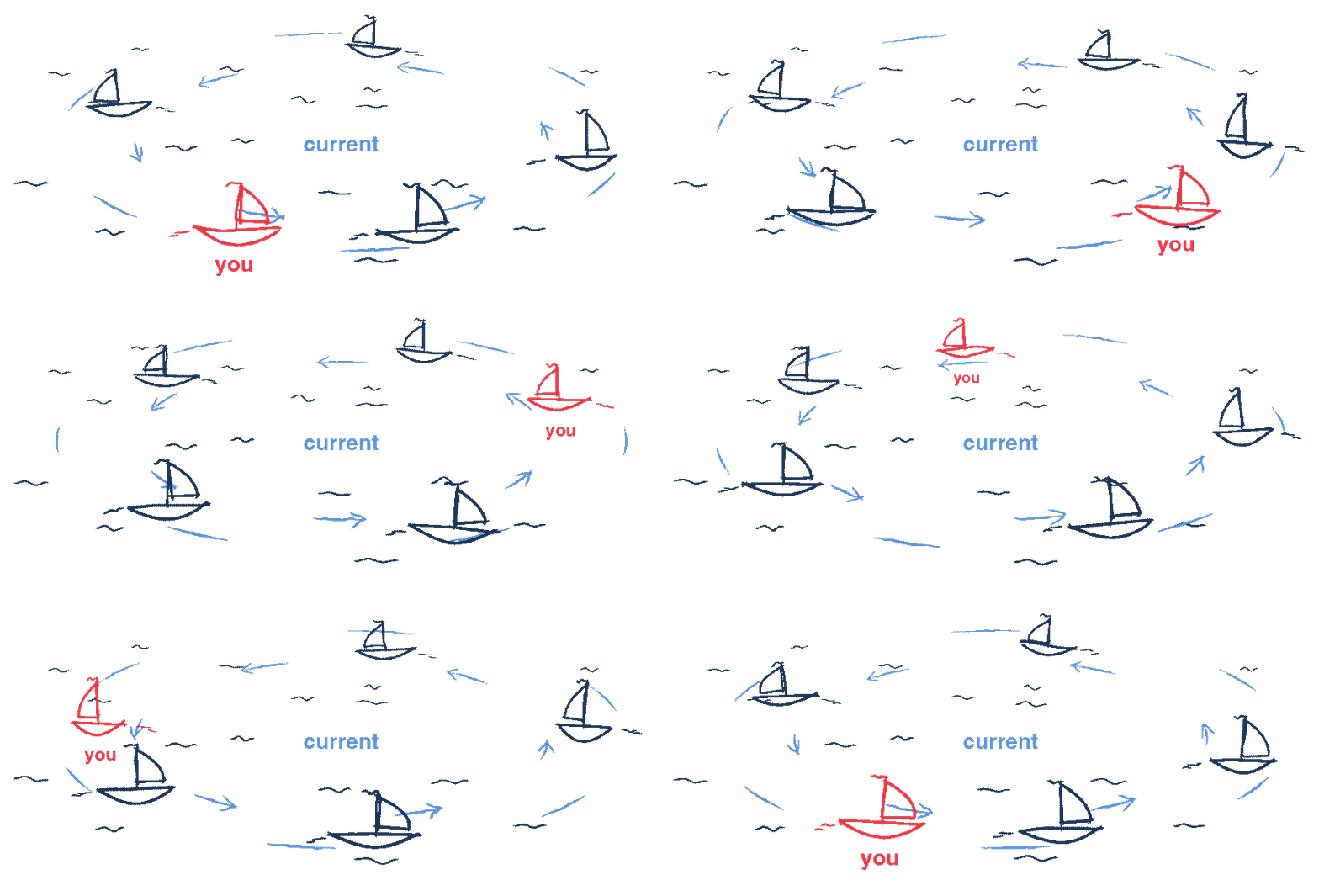
The goal of the race is not to do the most loops. Instead, one boat has been labeled the target boat.
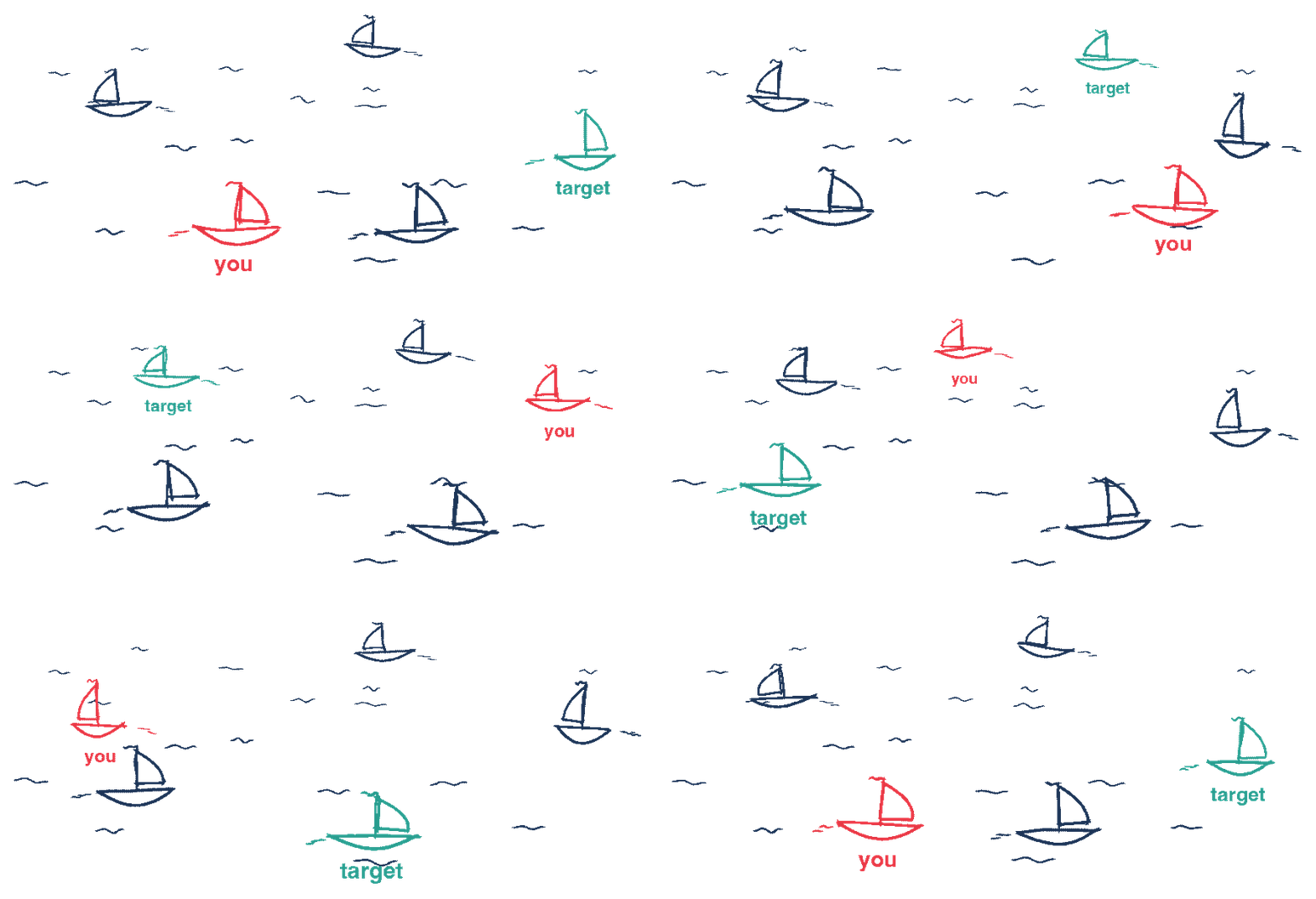
The goal of the race is to catch that boat.
You have exactly one tool at your disposal: your sail. The wind in the part of the world where this curious race is taking place always blows from east to west. You can put your sail up to catch the wind, or put it down to opt-out of the wind’s effects.
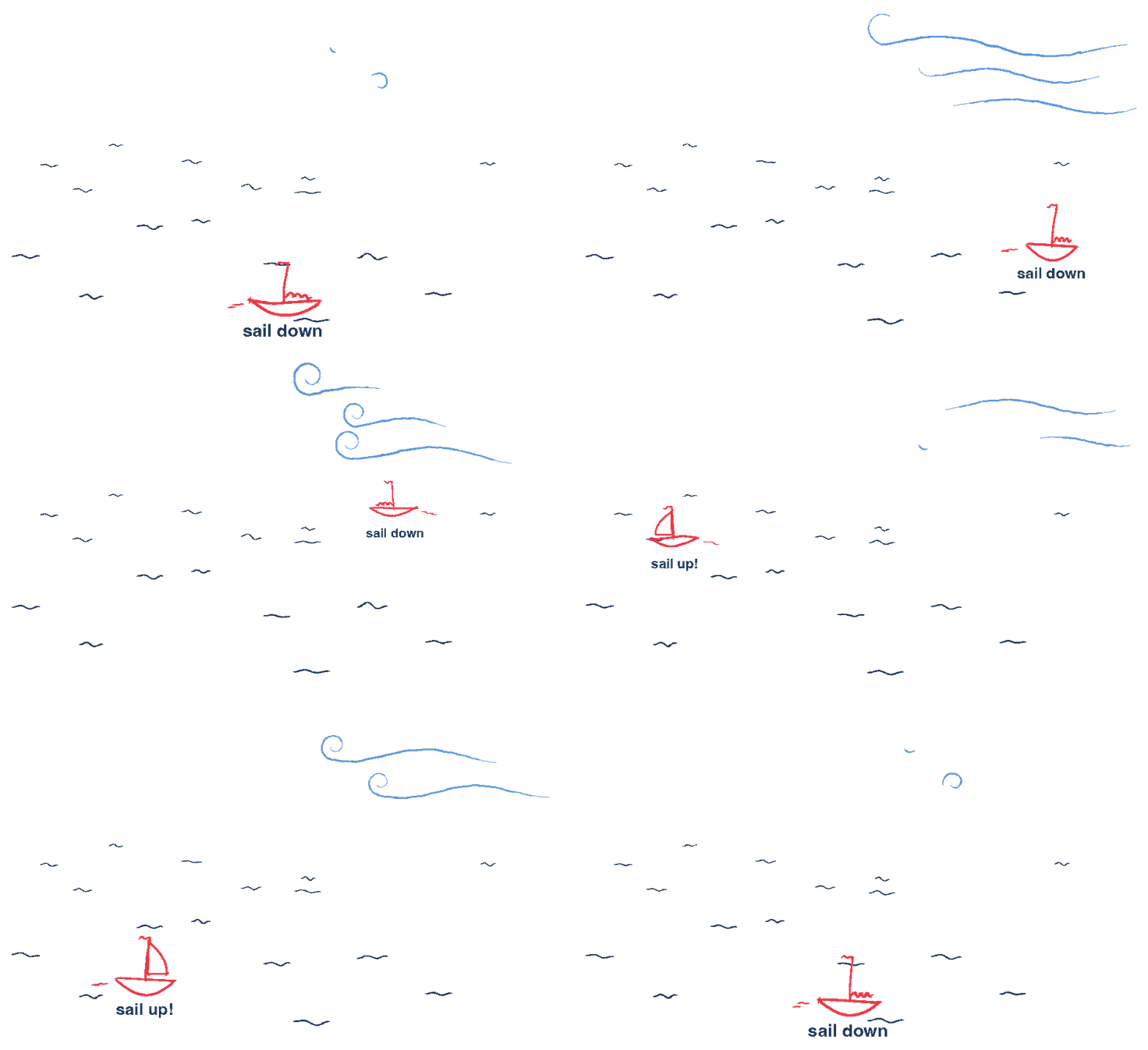
Q: How do you catch the target as quickly as possible? I’ll put some Jeopardy! music on while you think.

A: It depends on where the target boat is relative to you!
If it’s a little bit ahead of you, then you want to put your sail up when the wind is at your back, and put the sail down when the wind is blowing against you. You want to get wind when it speeds you up, and avoid it when it slows you down:
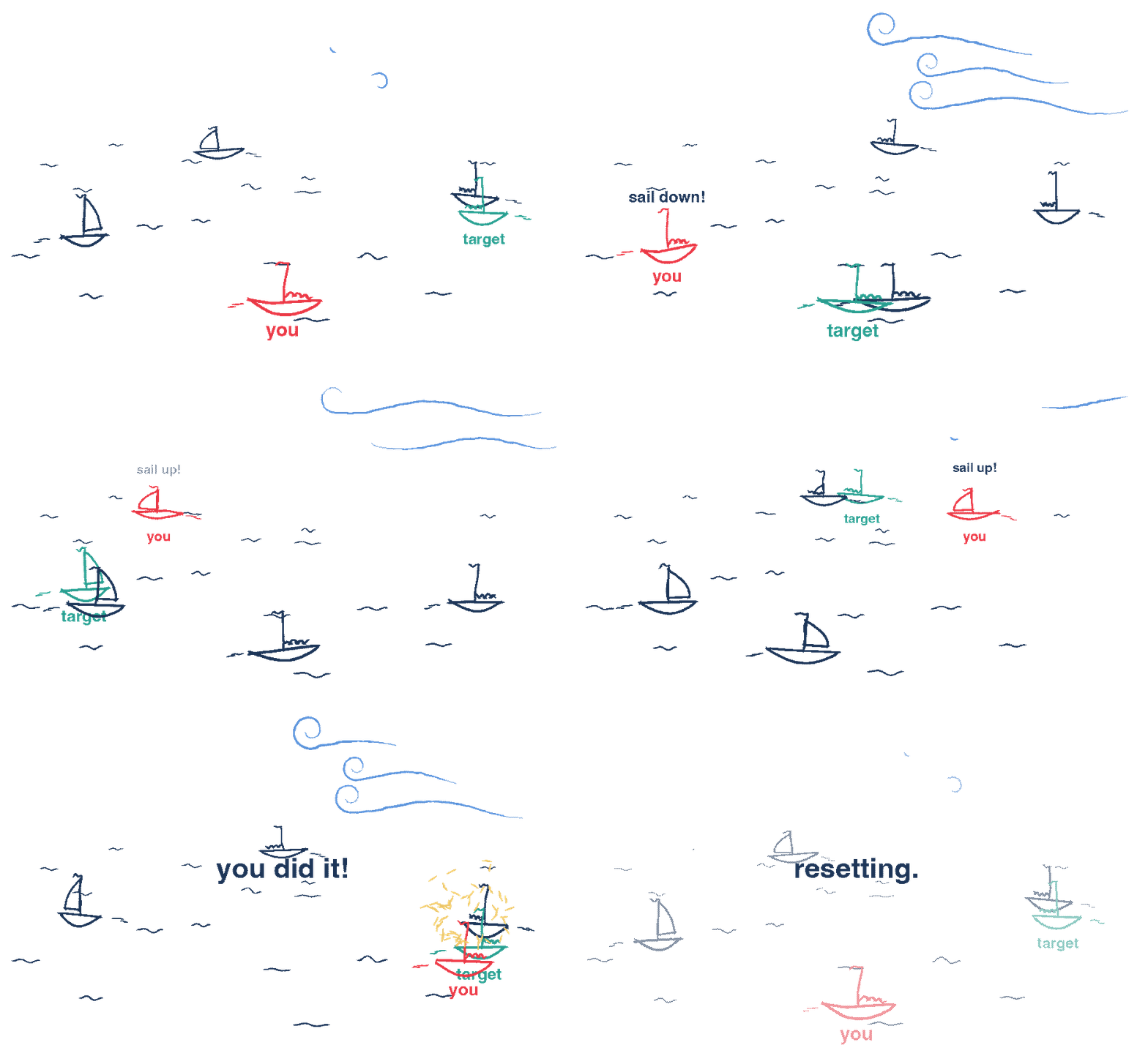
If it’s a little bit behind you, then you want to put your sail up when the wind is blowing against you, and put the sail down when the wind is pushing you ahead. You want to get wind when it slows you down and avoid it when it speeds you up:
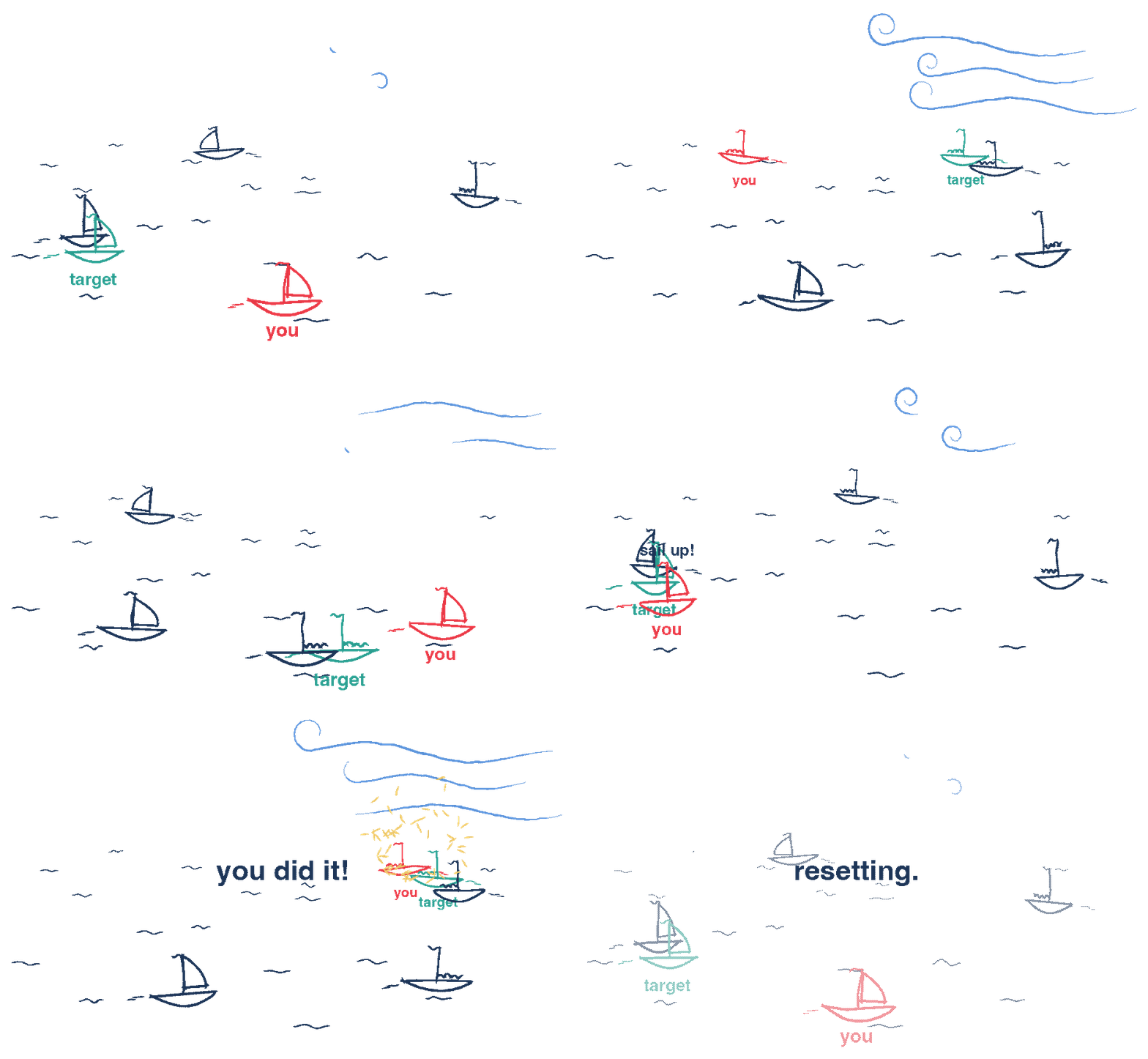
Here’s the mapping to jet lag:
The boat’s location in the loop is your biological time—the “time zone” you’re starting in.
The target boat is where you want to be in your destination time zone.
The wind is light exposure.
Putting your sail up is availing yourself of it: getting light.
Putting your sail down is avoiding light.
You get over jet lag by getting light at the times when it helps you catch the target and avoiding light at times when it pushes you away from the target.
Obviously it is not that simple or you would not have made this a multipart blog post
Yeah, but consider how much heavy lifting is done by this analogy:
People’s bodies change over 24 hours as we complete a circadian day. Jet lag is the process of catching a looping target while also looping ourselves.
Just like the wind does different things to your boat (speeds it up, slows it down) depending on how far through a cycle your boat is, so too does light do different things to your body (speeds it up, slows it down) depending on how far through the circadian day you are.
There isn’t a “one-size-fits-all” rule—you have to do very different things depending on whether the target boat is ahead or behind you.
The right choice for you in a given moment (wind or no wind, light or no light) doesn’t depend on what the target boat is doing in that moment. In other words: adjusting as quickly as possible can mean dimming the lights when it’s bright in your destination, or getting light when it’s dark in your destination.
But shouldn’t I just follow the sun?
Sometimes, but not always!
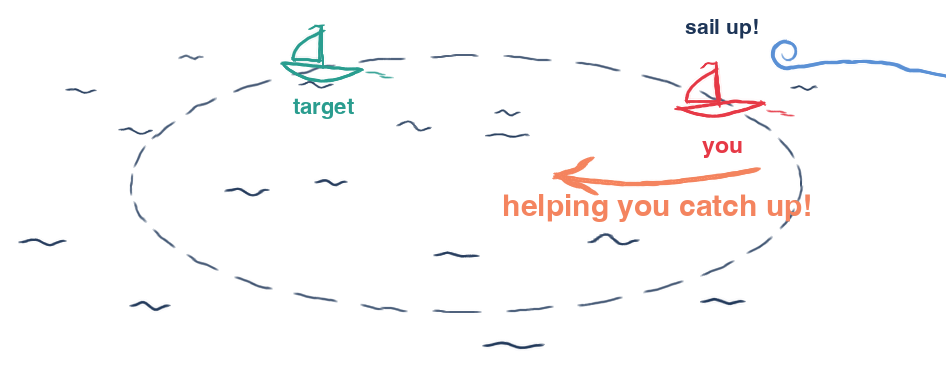
Here’s a case where it’s great to follow the sun: You normally get up at 7:00 am. You’re going from New York to London. You land in the U.K. at 9:00 am London time. This is 4:00 am in your home time zone. You are probably in the biological zone where light speeds your rhythms up. Speeding yourself up is what you want to do for this trip. Getting a ton of light at this time will help you catch the target. In boat race terms, it’s like this:
Here’s a case where it’s bad to follow the sun: You normally get up at 7:00 am. You’re going from New York to Istanbul. You land in Turkey at 9:00 am local time. This is 2:00 am in your home time zone. You are probably in the biological zone where light slows your rhythms down. Slowing down your clock is the opposite of what you want to do for this trip. Getting a ton of light at this time will not help you catch the target. In other words:
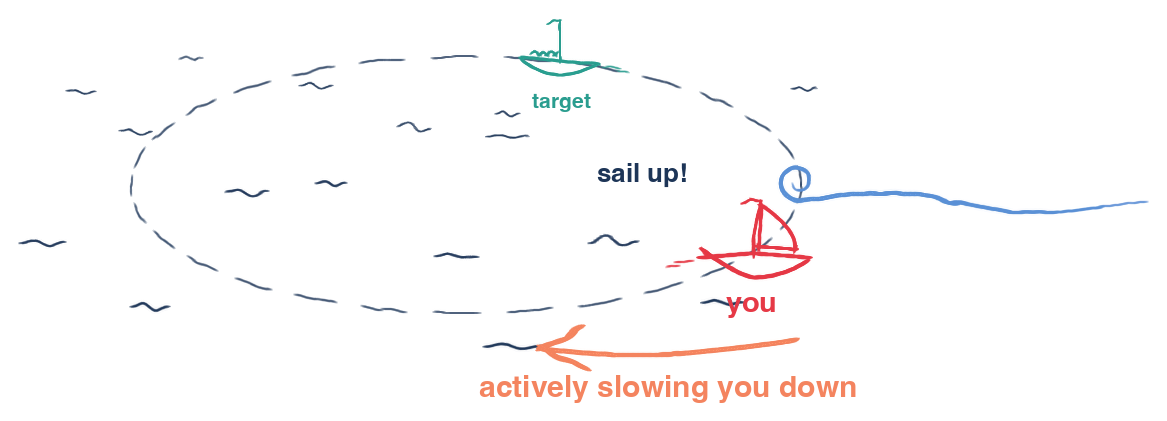
Following the sun is a very natural thing to do. But jet lag is inherently unnatural—abruptly changing light/dark schedules is not a thing we evolved for— so natural solutions don’t apply.
So how do I know what the “right times” to get and avoid light are?
In my boat animations, it’s easy to tell when having your sail up speeds you up or slows you down: It speeds you up when you’re going the same direction as the wind, and it slows you down when you’re going against the wind.
The equivalent information for your body’s clock is encoded in a phase response curve (PRC). To figure out how to get over jet lag for a given trip, you can sit down with a copy of the human phase response curve and apply the following algorithm:
Start with the PRC shifted so it represents your current biological time.
If you’re going eastward, get light during the phase advance part of the PRC, and darkness elsewhere.
If you’re going westward, get light during the phase delay part of the PRC, and darkness elsewhere.
Slide the PRC to the left or right to reflect how much you shifted today
Repeat until you’re in sync with the new time zone.
This will give you a schedule to get over jet lag. Congratulations; you did it. The “Part 1” in the title of this blog was a fake-out. We’re done here.
Just kidding
That schedule probably sucks! It sucks for any number of reasons, including:
If you don’t follow it exactly—your flight gets delayed, you deviate from the schedule because you want to go out—you will have no idea what to do from then on.
You won’t want to follow it exactly, because it tells you to get a bunch of darkness during the day.
You won’t want to follow it exactly, because if you try to shift before you leave, it’ll have you getting a ton of light at night.
The darkness times and the times when you want to be asleep will be out-of-sync.
The darkness times and the times you can fall and stay asleep will be out-of-sync, and, of course,
It’s not actually the best schedule because it reduces the circadian clock to a single dimension (phase).
Not to mention, you could only make a schedule to begin with if “Start with the PRC shifted so it represents your current biological time” meant something to you, and I purposefully threw you no lifelines there.
So that’s a way of getting a schedule, but probably not a great one. Want to do better? Stay tuned for Part 2.
Just be on an empty stomach during the flight. Then there's no jet lag.
By the way, those animations are cool, how did you make them?
I need it really
Thank you